

HOME / TECHNOLOGY

SAFE Foiling System
SAFE (Submerged-object Adaptive Foil Elevation)
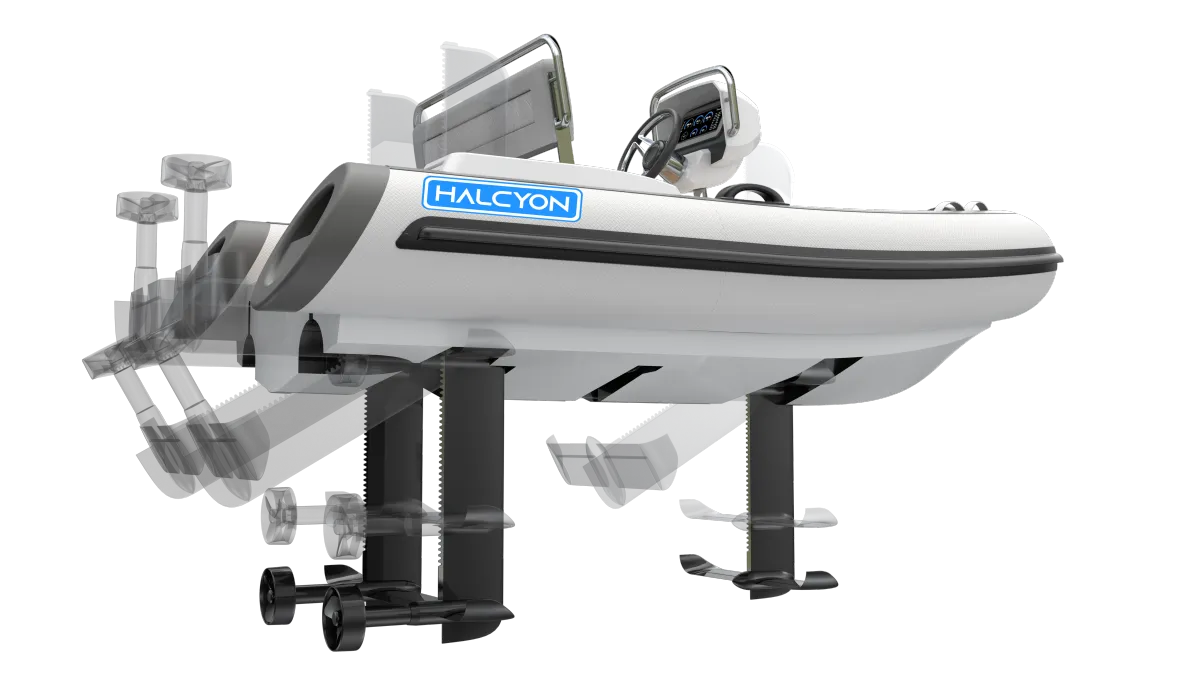
The SAFE hydrofoil retraction system is a unique, patent pending technology developed to significantly improve the safety and efficiency of operation of hydrofoil boats, watercraft and vessels across a wide range of recreational, commercial, government and defence applications.
The SAFE foiling system is installed on all HALCYON craft and is available for licence to other manufacturers.
The Halcyon SAFE foiling system provides a long-awaited answer to the question...
"what happens when you hit something?".
The SAFE foiling system provides a straightforward answer, and that is "the foils quickly fold away out of the path of the collision, the craft reverts to hullborne operation, and the collision is relatively uneventful. Zero or minimal damage to the foils. After the collision event is cleared, the foils rotate back into place, and the craft can resume foiling operation."
Why develop SAFE?
They say a picture tells a thousand words. The image to the right explains why Halcyon developed the SAFE foiling system.
The solution to the question of what "happens when you hit something" is a 50 year old challenge to the global industry that began in 1972 when a US Navy hydrofoil vessel struck a reef off Puerto Rico and broke away the forward foils. The aft foils remained in place, but badly damaged. This accident resulted in the scrapping of the vessel and many injured crew.
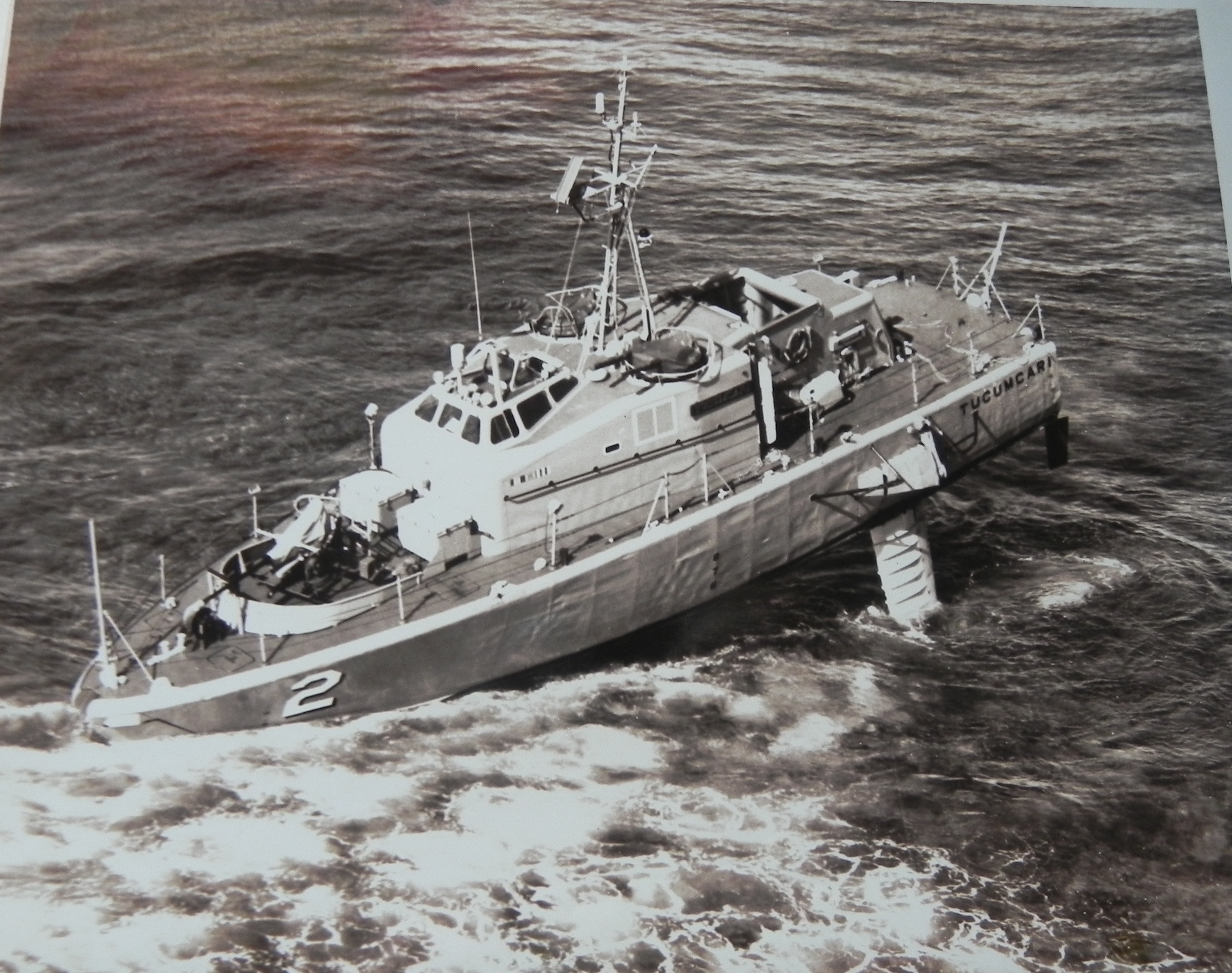
USS Tucumcari, 16 November 1972, Vieques Island, Puerto Rico
By PH2 Karl Rehbaum - United States Navy Photographic Division, Public Domain.
US Navy / Wikipedia Commons.
Seven (7) months after the Tucumcari grounding, Boeing filed a milestone patent that described a system to absorb some of the energy of an impact with the forward hydrofoil in an effort to reduce the structural loads and all craft to survive such and event. All subsequent attempts (right up until the present day) to manage potential damage during such an event are derivative of this patent.
The hydrofoiling technology on the Tucumcari is the foundation (after it was passed into the Pegasus Class) of what is fitted to the Mitsubishi Jetfoils, which still represent the most advanced commercial fast ferry hydrofoil in the world (although recent developments in electric hydrofoiling technology are rapidly overtaking). In 2013 a Boeing Jetfoil struck a submerged object and more than 80 people were injured.
Halcyon believes that hydrofoils are the best solution for people transport and fun on the water, as they cut energy requirements by 80%, allow battery electric propulsion, and are great for the environment, dry, quiet, create no wash, and are super fun.
However, if we are to put hydrofoil watercraft in the hands of untrained consumers, they also need to be practical, robust and safe in the event of inevitable accidents. The technology to solve this did not exist a decade ago. It does now. The Halcyon SAFE foiling system is the answer.
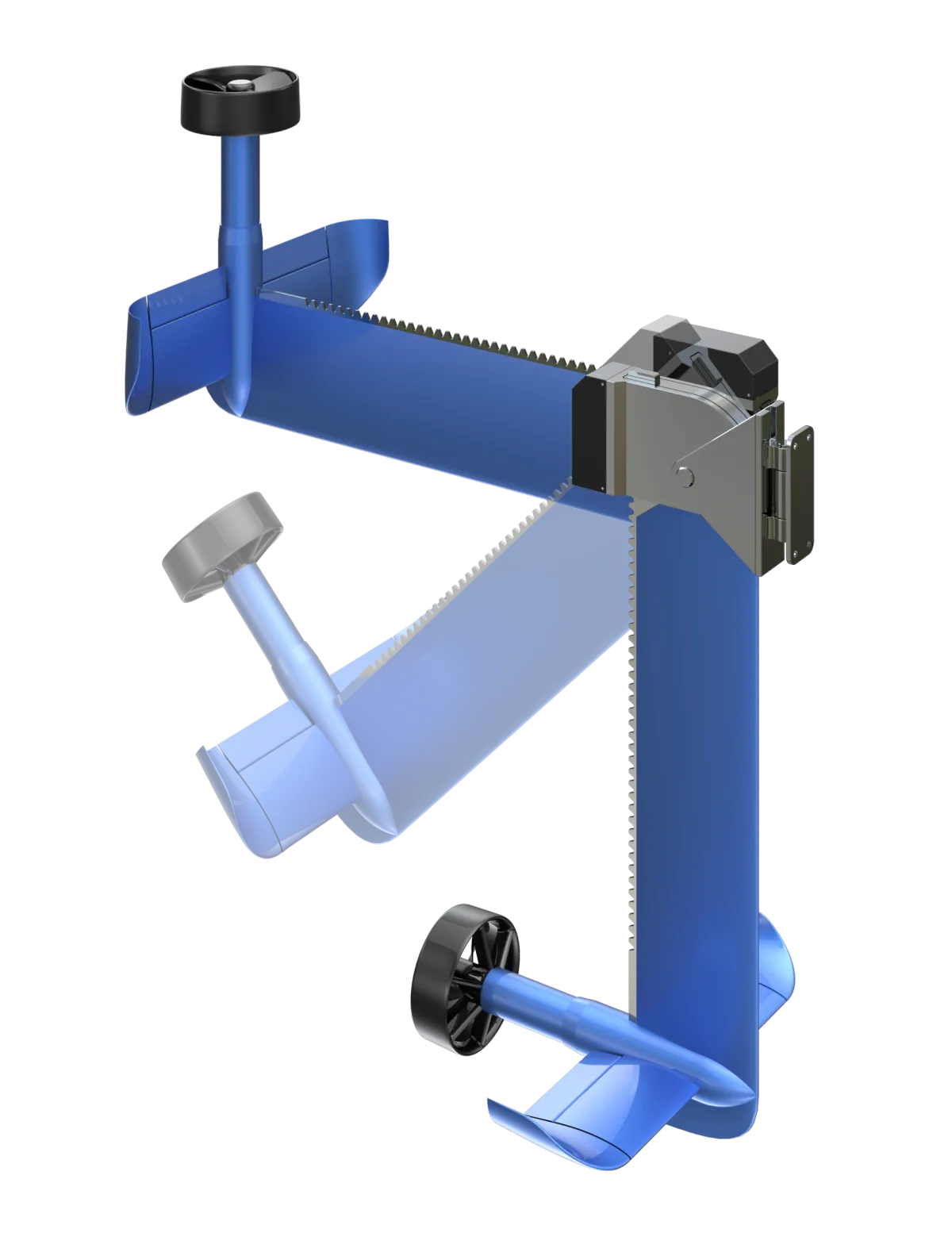
Foil and Strut Assembly Fold Aft
The SAFE foiling system allows the foil and strut assembly to release in the event of a collision or a predicted collision, allowing the assembly to rotate aft in compliance with the collision object or ground to avoid damaging contact.
Both aft and forward foils are equipped with SAFE, so that all struts release at the same time. This allows the boat to settle to hull-borne mode without any extreme pitching or trim.
Importantly, after a collision has been avoided, the foils can be automatically rotated back into their operational vertical position to resume foiling operation. This avoids annoying and potentially expensive delays.
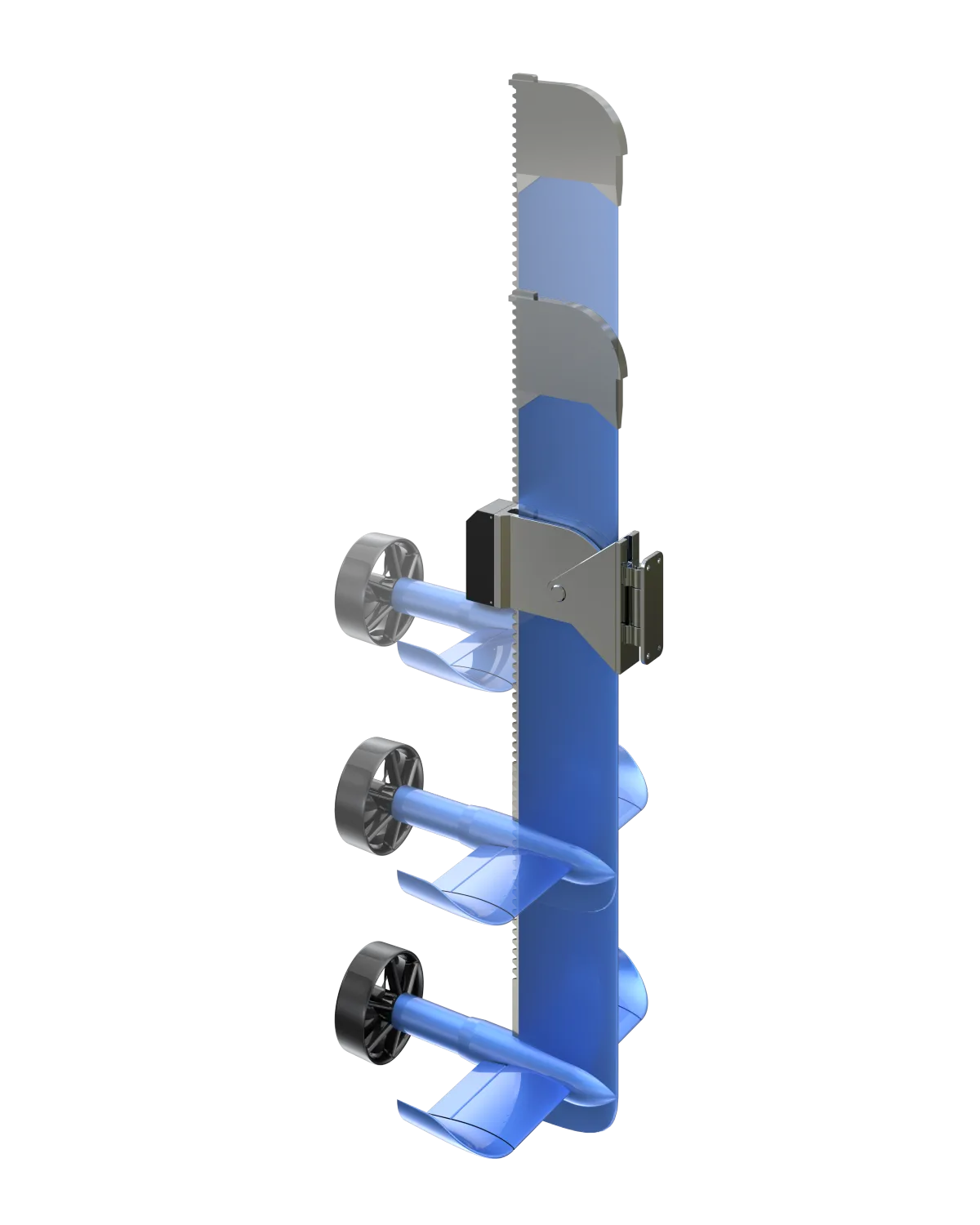
Vertical Extension and Retraction
The foil and strut assemblies can be vertically extended or retracted at the push of a button. There are three vertical positions for the foils:
Parked Position:
In the 'parked' position, the foils are fully retracted up into recesses in the hull. With the foils 'parked', the craft to be driven onto a trailer, beached, or lowered onto a stanbard RIB cradle.
Hullborne Position:
In the 'hull borne' position, the foils are partially retracted, allowing the craft to operate on its hull like a standard tender. In this position, the steering struts are able to rotate to provide vectored thrust.
Foiling Position:
In the 'foiling' position, the foils are fully extended, allowing the craft to operate in foiling mode.
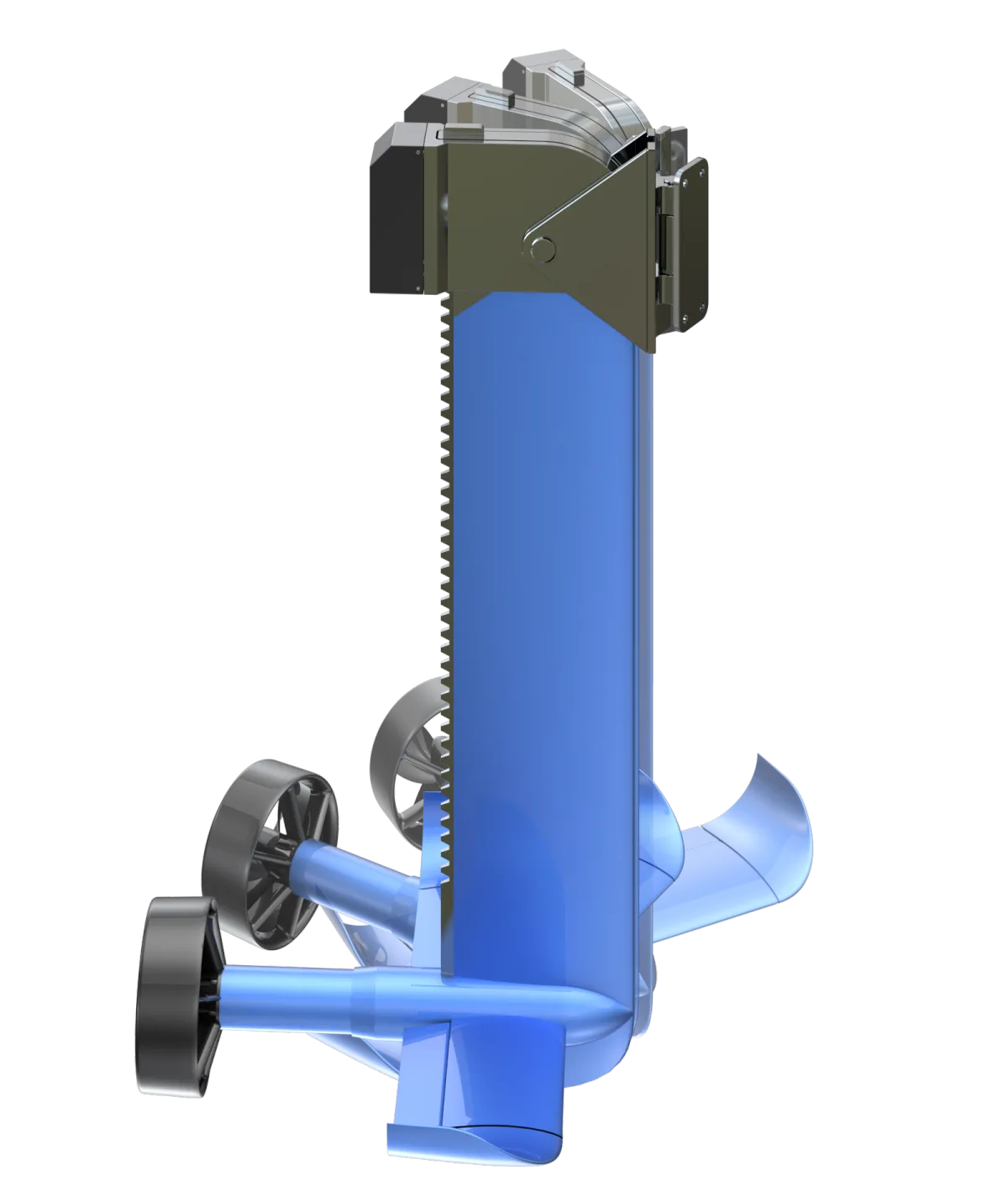
Foil and Strut Assembly can Rotate to Steer
Foil and strut assemblies are optionally able to rotate to provide steering. This is particularly advantageous when manoeuvring near a yacht or dock. Each drive motor can be independently vectored to provide joystick directional control. This makes docking the craft very simple.